

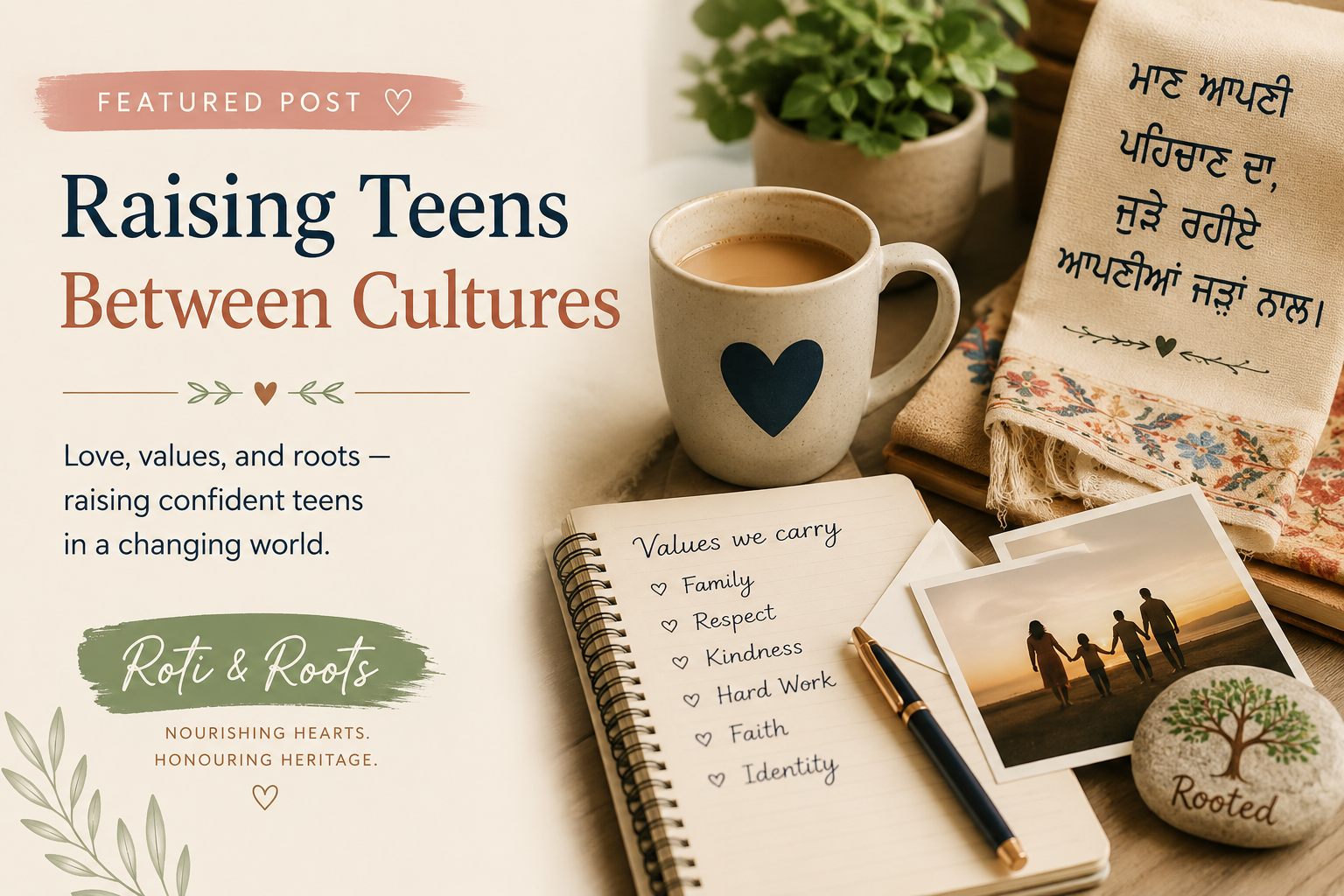
As parents, we all hope to pass on the values, traditions, and lessons that shaped us. But when you are raising children in a country different from the one you grew up in, the journey can feel both beautiful and challenging.
Many of us left our home countries carrying more than suitcases. We brought memories, family traditions, recipes, languages, beliefs, and stories that connect us to our roots. Yet our children are growing up in a different world—one influenced by a culture, lifestyle, and way of thinking that may be very different from our own.
For me, this is one of the most delicate parts of parenting. How do we help our children embrace the opportunities of the country they live in while staying connected to where they come from?
Living Between Two Worlds
Our teenagers often walk between two cultures every day.
At home, they may hear Punjabi, Hindi, or another language spoken. They celebrate cultural festivals, eat traditional foods, and learn family values that have been passed down through generations. Outside the home, they are influenced by friends, social media, school, and the culture of the country they live in. Sometimes these worlds blend beautifully. Other times they can create confusion, questions, and even conflict.
As parents, it is natural to worry that our children may lose touch with their heritage. We wonder if they will understand the sacrifices made by previous generations or appreciate the traditions that mean so much to us.
Connection Matters More Than Perfection
One lesson I continue to learn is that preserving culture is not about forcing traditions. It is about creating connection. A teenager may not always want to wear traditional clothes, speak their parents’ language perfectly, or participate enthusiastically in every cultural event.
That does not mean they have rejected their roots. What matters most is helping them understand the stories behind the traditions. A family recipe becomes more meaningful when they know who taught it to us. A festival becomes more meaningful when they understand why it is celebrated. A language becomes more valuable when it helps them communicate with grandparents and relatives they love.
Teaching Through Everyday Moments
Culture is not only preserved through major celebrations. It lives in everyday life. It lives in family meals around the dinner table. It lives in the stories we share about our childhood. It lives in the music we play, the values we teach, and the kindness we model. Some of the most important lessons are passed on during ordinary moments that may seem insignificant at the time.
Giving Them Room to Grow
One of the hardest parts of parenting teenagers is learning when to guide and when to step back. Our children are developing their own identities. They are figuring out who they are, what they believe, and how they fit into the world. Sometimes they may question traditions. Sometimes they may challenge our views. This can feel uncomfortable, but it is often part of healthy growth.
Our role is not to create a copy of ourselves. Our role is to give them strong roots and the confidence to grow into their own unique individuals.
Looking After Ourselves Too
As mothers, we often focus so much on our children’s wellbeing that we forget our own. Raising teenagers can bring worry, self-doubt, and emotional ups and downs. This is why mindfulness and self-care matter. When we take care of ourselves, we are better able to support our children through their own challenges. Self-care is not selfish. It is one of the ways we remain emotionally available for the people we love.
The Gift We Hope to Leave Behind
My hope is not that my children remember every rule, tradition, or piece of advice I have given them.
My hope is that they carry a sense of belonging.
That they know where they come from.
ਮਾਪੇ ਬਣਨਾ ਆਪਣੇ ਆਪ ਵਿੱਚ ਇੱਕ ਵੱਡੀ ਜ਼ਿੰਮੇਵਾਰੀ ਹੈ। ਅਸੀਂ ਸਾਰੇ ਚਾਹੁੰਦੇ ਹਾਂ ਕਿ ਆਪਣੇ ਬੱਚਿਆਂ ਨੂੰ ਉਹ ਕਦਰਾਂ-ਕੀਮਤਾਂ, ਰਿਵਾਇਤਾਂ ਅਤੇ ਜੀਵਨ ਦੇ ਸਬਕ ਦੇਈਏ ਜਿਨ੍ਹਾਂ ਨਾਲ ਅਸੀਂ ਵੱਡੇ ਹੋਏ ਹਾਂ । ਤਾਂ ਕਿ ਉਹ ਜਾਣਣ ਕਿ ਉਹ ਕਿੱਥੋਂ ਆਏ ਹਨ, ਆਪਣੇ ਵਿਰਸੇ ‘ਤੇ ਮਾਣ ਕਰਨ ਅਤੇ ਆਪਣੇ ਪਰਿਵਾਰਕ ਰਿਵਾਜ਼ ਅਤੇ ਰਸਮਾਂ ਨੂੰ ਅੱਗੇ ਲੈ ਕੇ ਜਾਣ।
ਪਰ ਜਦੋਂ ਅਸੀਂ ਆਪਣੇ ਬੱਚਿਆਂ ਨੂੰ ਉਸ ਦੇਸ਼ ਵਿੱਚ ਪਾਲਦੇ ਹਾਂ ਜੋ ਸਾਡੇ ਆਪਣੇ ਬਚਪਨ ਦੇ ਦੇਸ਼ ਤੋਂ ਵੱਖਰਾ ਹੈ, ਤਾਂ ਇਹ ਸਫ਼ਰ ਹੋਰ ਵੀ ਨਾਜ਼ੁਕ ਅਤੇ ਚੁਣੌਤੀਪੂਰਨ ਬਣ ਜਾਂਦਾ ਹੈ। ਸਾਡੇ ਵਿੱਚੋਂ ਬਹੁਤ ਸਾਰੇ ਲੋਕ ਸਿਰਫ਼ ਸੂਟਕੇਸ ਲੈ ਕੇ ਨਹੀਂ ਆਏ ਸਨ। ਅਸੀਂ ਆਪਣੇ ਨਾਲ ਯਾਦਾਂ, ਪਰਿਵਾਰਕ ਰਿਵਾਇਤਾਂ, ਭਾਸ਼ਾਵਾਂ, ਸੱਭਿਆਚਾਰ, ਰਹਿਣ-ਸਹਿਣ ਅਤੇ ਖਾਣ-ਪੀਣ ਦੇ ਤਰੀਕੇ, ਵਿਸ਼ਵਾਸ ਅਤੇ ਉਹ ਕਹਾਣੀਆਂ ਵੀ ਲਿਆਏ ਸੀ ਜੋ ਸਾਨੂੰ ਆਪਣੀਆਂ ਜੜ੍ਹਾਂ ਨਾਲ ਜੋੜਦੀਆਂ ਹਨ। ਸਾਡੇ ਦਿਲਾਂ ਵਿੱਚ ਅੱਜ ਵੀ ਆਪਣੇ ਬਚਪਨ ਦੀਆਂ ਮਿੱਠੀਆਂ ਯਾਦਾਂ, ਪਰਿਵਾਰਕ ਇਕੱਠਾਂ ਦੀ ਗਰਮੀ ਅਤੇ ਉਹ ਕਦਰਾਂ- ਕੀਮਤਾਂ ਹਨ ਜਿਨ੍ਹਾਂ ਨੇ ਸਾਡੀ ਸੋਚ ਨੂੰ ਰੂਪ ਦਿੱਤਾ।
ਇੱਕ ਮਾਪੇ ਹੋਣ ਦੇ ਨਾਤੇ, ਅਸੀਂ ਅਕਸਰ ਆਪਣੇ ਆਪ ਨੂੰ ਸਵਾਲ ਪੁੱਛਦੇ ਹਾਂ। ਅਸੀਂ ਉਨ੍ਹਾਂ ਨੂੰ ਆਤਮ-ਨਿਰਭਰ ਬਣਨ ਲਈ ਕਿਵੇਂ ਪ੍ਰੋਤਸਾਹਿਤ ਕਰੀਏ, ਬਿਨਾਂ ਉਸ ਨਜ਼ਦੀਕੀ ਅਤੇ ਪਰਿਵਾਰਕ ਜੁੜਾਅ ਨੂੰ ਖੋਏ ਜੋ ਸਾਡੇ ਲਈ ਬਹੁਤ ਮਹੱਤਵਪੂਰਨ ਹੈ? ਅਸੀਂ ਆਪਣੀਆਂ ਜੜ੍ਹਾਂ, ਆਪਣੀ ਭਾਸ਼ਾ ਅਤੇ ਆਪਣੀਆਂ ਕਦਰਾਂ-ਕੀਮਤਾਂ ਕਿਵੇਂ ਅਗਲੀ ਪੀੜ੍ਹੀ ਤੱਕ ਪਹੁੰਚਾਈਏ, ਜਦੋਂ ਕਿ ਉਨ੍ਹਾਂ ਨੂੰ ਆਪਣੀ ਪਛਾਣ ਖੁਦ ਬਣਾਉਣ ਅਤੇ ਆਪਣੇ ਰਸਤੇ ਚੁਣਨ ਦੀ ਖੁੱਲ੍ਹ ਵੀ ਦਈਏ? ਇਹ ਸਵਾਲ ਅਕਸਰ ਸੌਖੇ ਜਵਾਬ ਨਹੀਂ ਰੱਖਦੇ, ਪਰ ਇਹੀ ਸਾਡੇ ਲਈ ਦੋ ਸਭਿਆਚਾਰਾਂ ਦੇ ਵਿਚਕਾਰ ਬੱਚਿਆਂ ਨੂੰ ਪਾਲਣ ਦੇ ਸੁੰਦਰ ਅਤੇ ਜਟਿਲ ਸਫ਼ਰ ਦਾ ਹਿੱਸਾ ਹੁੰਦੇ ਹਨ।
ਮੇਰੇ ਲਈ, ਇਹ ਮਾਪੇ ਬਣਨ ਦੇ ਸਭ ਤੋਂ ਖੂਬਸੂਰਤ ਅਤੇ ਔਖੇ ਪੱਖਾਂ ਵਿੱਚੋਂ ਇੱਕ ਹੈ। ਸਾਡੇ ਬੱਚੇ ਰੋਜ਼ਾਨਾ ਦੋ ਵੱਖ-ਵੱਖ ਸੱਭਿਆਚਾਰਾਂ ਨਾਲ ਨਿਪਟਣ ਅਤੇ ਸੰਤੁਲਨ ਬਣਾਉਣ ਦੀ ਕੋਸ਼ਿਸ਼ ਕਰਦੇ ਹਨ। ਘਰ ਵਿੱਚ ਉਹ ਪੰਜਾਬੀ, ਹਿੰਦੀ ਜਾਂ ਆਪਣੀ ਮਾਂ-ਬੋਲੀ ਸੁਣਦੇ ਹਨ। ਉਹ ਤਿਉਹਾਰ ਮਨਾਉਂਦੇ ਹਨ, ਪਰੰਪਰਾਗਤ ਖਾਣੇ ਖਾਂਦੇ ਅਤੇ ਉਹ ਮੂਲ ਸਿੱਖਦੇ ਹਨ ਜੋ ਪੀੜ੍ਹੀਆਂ ਤੋਂ ਚਲੇ ਆ ਰਹੇ ਹਨ। ਘਰ ਤੋਂ ਬਾਹਰ ਉਨ੍ਹਾਂ ‘ਤੇ ਦੋਸਤਾਂ, ਸਕੂਲ, ਸੋਸ਼ਲ ਮੀਡੀਆ ਅਤੇ ਉਸ ਸਮਾਜ ਦਾ ਪ੍ਰਭਾਵ ਹੁੰਦਾ ਹੈ ਜਿਸ ਵਿੱਚ ਉਹ ਰਹਿੰਦੇ ਹਨ। ਕਈ ਵਾਰ ਇਹ ਦੋਵੇਂ ਦੁਨੀਆਂ ਬਹੁਤ ਸੋਹਣੇ ਢੰਗ ਨਾਲ ਇਕੱਠੀਆਂ ਹੋ ਜਾਂਦੀਆਂ ਹਨ। ਪਰ ਕਈ ਵਾਰ ਇਹ ਉਲਝਣ, ਸਵਾਲ ਅਤੇ ਟਕਰਾਅ ਵੀ ਪੈਦਾ ਕਰਦੀਆਂ ਹਨ।
ਮਾਪਿਆਂ ਵਜੋਂ ਇਹ ਸੋਚਣਾ ਕੁਦਰਤੀ ਹੈ ਕਿ ਕਿਤੇ ਸਾਡੇ ਬੱਚੇ ਆਪਣੇ ਵਿਰਸੇ ਤੋਂ ਦੂਰ ਨਾ ਹੋ ਜਾਣ। ਅਸੀਂ ਚਿੰਤਾ ਕਰਦੇ ਹਾਂ ਕੀ ਉਹ ਪਿਛਲੀਆਂ ਪੀੜ੍ਹੀਆਂ ਦੀਆਂ ਕੁਰਬਾਨੀਆਂ ਨੂੰ ਸਮਝਣਗੇ? ਕੀ ਉਹ ਉਹਨਾਂ ਰਿਵਾਇਤਾਂ ਦੀ ਕਦਰ ਕਰਨਗੇ ਜੋ ਸਾਡੇ ਲਈ ਬਹੁਤ ਮਹੱਤਵਪੂਰਨ ਹਨ?
ਪਰ ਸਮੇਂ ਦੇ ਨਾਲ ਮੈਂ ਇੱਕ ਗੱਲ ਸਿੱਖੀ ਹੈ। ਸਭਿਆਚਾਰ ਨੂੰ ਜ਼ਬਰਦਸਤੀ ਨਹੀਂ ਸੰਭਾਲਿਆ ਜਾ ਸਕਦਾ। ਇਹ ਰਿਸ਼ਤਿਆਂ, ਸਮਝ ਅਤੇ ਜੁੜਾਅ ਰਾਹੀਂ ਜੀਉਂਦਾ ਰਹਿੰਦਾ ਹੈ। ਹੋ ਸਕਦਾ ਹੈ ਕਿ ਤੁਹਾਡਾ ਬੱਚਾ ਹਰ ਤਿਉਹਾਰ ਵਿੱਚ ਪੂਰੀ ਦਿਲਚਸਪੀ ਨਾ ਲਵੇ। ਹੋ ਸਕਦਾ ਹੈ ਕਿ ਉਹ ਹਮੇਸ਼ਾਂ ਆਪਣੀ ਮਾਂ-ਬੋਲੀ ਨਾ ਬੋਲੇ ਜਾਂ ਰਿਵਾਇਤੀ ਕੱਪੜੇ ਪਹਿਨਣਾ ਪਸੰਦ ਨਾ ਕਰੇ। ਇਸਦਾ ਇਹ ਮਤਲਬ ਨਹੀਂ ਕਿ ਉਸਨੇ ਆਪਣੀਆਂ ਜੜ੍ਹਾਂ ਨੂੰ ਛੱਡ ਦਿੱਤਾ ਹੈ।
ਅਸਲ ਮਹੱਤਵ ਇਹ ਹੈ ਕਿ ਉਹ ਰਿਵਾਇਤਾਂ ਦੇ ਪਿੱਛੇ ਦੀ ਕਹਾਣੀ ਨੂੰ ਸਮਝੇ।
ਇੱਕ ਪਰਿਵਾਰਕ ਵਿਅੰਜਨ ਹੋਰ ਵੀ ਖ਼ਾਸ ਬਣ ਜਾਂਦਾ ਹੈ ਜਦੋਂ ਬੱਚਿਆਂ ਨੂੰ ਪਤਾ ਲੱਗਦਾ ਹੈ ਕਿ ਇਹ ਸਾਨੂੰ ਕਿਸਨੇ ਸਿਖਾਇਆ ਸੀ। ਇੱਕ ਤਿਉਹਾਰ ਹੋਰ ਵੀ ਅਰਥਪੂਰਨ ਬਣ ਜਾਂਦਾ ਹੈ ਜਦੋਂ ਉਹ ਉਸਦਾ ਇਤਿਹਾਸ ਜਾਣਦੇ ਹਨ। ਇੱਕ ਭਾਸ਼ਾ ਦੀ ਕੀਮਤ ਵੱਧ ਜਾਂਦੀ ਹੈ ਜਦੋਂ ਉਹ ਇਸ ਰਾਹੀਂ ਆਪਣੇ ਦਾਦਾ-ਦਾਦੀ ਜਾਂ ਨਾਨਾ-ਨਾਨੀ ਨਾਲ ਗੱਲਬਾਤ ਕਰ ਸਕਦੇ ਹਨ।
ਸਭਿਆਚਾਰ ਸਿਰਫ਼ ਵੱਡੇ ਸਮਾਗਮਾਂ ਵਿੱਚ ਨਹੀਂ ਜੀਉਂਦਾ। ਇਹ ਰੋਜ਼ਾਨਾ ਦੀ ਜ਼ਿੰਦਗੀ ਵਿੱਚ ਵੱਸਦਾ ਹੈ। ਇਹ ਪਰਿਵਾਰ ਨਾਲ ਖਾਧੇ ਗਏ ਖਾਣਿਆਂ ਵਿੱਚ ਵੱਸਦਾ ਹੈ। ਇਹ ਬਚਪਨ ਦੀਆਂ ਸੁਣਾਈਆਂ ਕਹਾਣੀਆਂ ਵਿੱਚ ਵੱਸਦਾ ਹੈ। ਇਹ ਸਾਡੇ ਰੋਜ਼ਾਨਾ ਦੇ ਜੀਵਨ ਦੇ ਢੰਗ, ਵਿਹਾਰ,ਰਹਿਣ ਸਹਿਣ ਵਿੱਚ ਮੌਜੂਦ ਹੈ ਜੋ ਅਸੀਂ ਆਪਣੇ ਬੱਚਿਆਂ ਨੂੰ ਸਿਖਾਉਂਦੇ ਹਾਂ। ਕਈ ਵਾਰ ਸਭ ਤੋਂ ਵੱਡੇ ਸਬਕ ਉਹਨਾਂ ਆਮ ਪਲਾਂ ਵਿੱਚ ਦਿੱਤੇ ਜਾਂਦੇ ਹਨ ਜੋ ਉਸ ਵੇਲੇ ਛੋਟੇ ਲੱਗਦੇ ਹਨ, ਪਰ ਜ਼ਿੰਦਗੀ ਭਰ ਨਾਲ ਰਹਿੰਦੇ ਹਨ।
ਬੱਚਿਆਂ ਦੀ ਪਰਵਰਿਸ਼ ਦਾ ਸਭ ਤੋਂ ਔਖਾ ਹਿੱਸਾ ਇਹ ਸਿੱਖਣਾ ਹੈ ਕਿ ਕਦੋਂ ਰਾਹ ਦਿਖਾਉਣਾ ਹੈ ਅਤੇ ਕਦੋਂ ਇੱਕ ਕਦਮ ਪਿੱਛੇ ਹਟ ਜਾਣਾ ਹੈ। ਸਾਡੇ ਬੱਚੇ ਆਪਣੀ ਪਛਾਣ ਬਣਾ ਰਹੇ ਹੁੰਦੇ ਹਨ। ਉਹ ਆਪਣੇ ਵਿਚਾਰ, ਸੁਪਨੇ ਅਤੇ ਵਿਸ਼ਵਾਸ ਵਿਕਸਿਤ ਕਰ ਰਹੇ ਹੁੰਦੇ ਹਨ। ਕਈ ਵਾਰ ਉਹ ਸਾਡੀਆਂ ਰਿਵਾਇਤਾਂ ਜਾਂ ਵਿਚਾਰਾਂ ‘ਤੇ ਸਵਾਲ ਵੀ ਕਰ ਸਕਦੇ ਹਨ। ਇਹ ਅਸਹਿਜ ਮਹਿਸੂਸ ਹੋ ਸਕਦਾ ਹੈ, ਪਰ ਇਹ ਉਨ੍ਹਾਂ ਦੇ ਵਿਕਾਸ ਦਾ ਇੱਕ ਸਧਾਰਣ ਹਿੱਸਾ ਹੈ।
ਸਾਡਾ ਕੰਮ ਆਪਣੇ ਵਰਗਾ ਇੱਕ ਹੋਰ ਵਿਅਕਤੀ ਤਿਆਰ ਕਰਨਾ ਨਹੀਂ ਹੈ।
ਸਾਡਾ ਕੰਮ ਉਨ੍ਹਾਂ ਨੂੰ ਮਜ਼ਬੂਤ ਜੜ੍ਹਾਂ ਦੇਣਾ ਅਤੇ ਆਪਣੀ ਵੱਖਰੀ ਪਛਾਣ ਬਣਾਉਣ ਦਾ ਹੌਸਲਾ ਅਤੇ ਮਾਹੌਲ ਦੇਣਾ ਹੈ।
ਇਸ ਪੂਰੇ ਸਫ਼ਰ ਦੌਰਾਨ ਸਾਨੂੰ ਆਪਣੇ ਆਪ ਨੂੰ ਵੀ ਨਹੀਂ ਭੁੱਲਣਾ ਚਾਹੀਦਾ। ਖ਼ਾਸ ਕਰਕੇ ਮਾਵਾਂ ਅਕਸਰ ਆਪਣੇ ਬੱਚਿਆਂ ਦੀਆਂ ਲੋੜਾਂ ਵਿੱਚ ਇੰਨੀ ਰੁੱਝ ਜਾਂਦੀਆਂ ਹਨ ਕਿ ਆਪਣੀ ਦੇਖਭਾਲ ਕਰਨੀ ਭੁੱਲ ਜਾਂਦੀਆਂ ਹਨ। ਬੱਚਿਆਂ ਦੀ ਪਰਵਰਿਸ਼ ਚਿੰਤਾ, ਸਵਾਲਾਂ ਅਤੇ ਭਾਵਨਾਤਮਕ ਉਤਾਰ-ਚੜ੍ਹਾਵਾਂ ਨਾਲ ਭਰੀ ਹੋ ਸਕਦੀ ਹੈ। ਇਸ ਲਈ ਸਵੈ-ਸੰਭਾਲ ਅਤੇ ਮਨ ਦੀ ਸ਼ਾਂਤੀ ਬਹੁਤ ਜ਼ਰੂਰੀ ਹੈ।
ਜਦੋਂ ਅਸੀਂ ਆਪਣੇ ਆਪ ਦਾ ਖ਼ਿਆਲ ਰੱਖਦੇ ਹਾਂ, ਤਦੋਂ ਹੀ ਅਸੀਂ ਆਪਣੇ ਬੱਚਿਆਂ ਦਾ ਸਹੀ ਢੰਗ ਨਾਲ ਸਾਥ ਦੇ ਸਕਦੇ ਹਾਂ। ਮੇਰੀ ਉਮੀਦ ਇਹ ਨਹੀਂ ਕਿ ਮੇਰੇ ਬੱਚੇ ਮੇਰੀ ਹਰ ਗੱਲ ਜਾਂ ਹਰ ਨਿਯਮ ਨੂੰ ਯਾਦ ਰੱਖਣ।
ਮੇਰੀ ਉਮੀਦ ਇਹ ਹੈ ਕਿ ਉਨ੍ਹਾਂ ਵਿੱਚ ਆਪਣਾਪਣ ਦੀ ਭਾਵਨਾ ਰਹੇ।
ਉਹ ਜਾਣਣ ਕਿ ਉਹ ਕਿੱਥੋਂ ਆਏ ਹਨ।
ਉਹ ਆਪਣੇ ਪਰਿਵਾਰ ਦੀਆਂ ਕਦਰਾਂ ਨੂੰ ਸਮਝਣ।
ਉਹ ਆਪਣੀ ਕਹਾਣੀ ਦੇ ਹਰ ਹਿੱਸੇ ‘ਤੇ ਮਾਣ ਕਰਨ।